Cape Town, the beauty of the South Atlantic
- Jul 13, 2023
- 24 min read
Since our arrival in South Africa, we have visited the metropolis on the Cape twice and taken many impressions with us. Two seasons, two worlds. During the first visit, in the rather cool southern spring, we were out and about a lot in the port and industrial area. We visited all the suppliers of the Knysna Yacht Company and took care of the details. We went to the US consulate for our visas and visited the Cape of Good Hope.
The second trip was a reunion with Herwig and a big shopping spree. This time in late summer (March/April) with the best weather and wonderful temperatures.

on the road to Cape Town
Cape Town - A fascinating metropolis at the Cape of Good Hope
Cape Town, or Kapstadt as it is known in German, is a stunning metropolis on the southernmost point of Africa. Located at the foot of the majestic Table Mountain and surrounded by an impressive coastal landscape, this city offers a mixture of fascinating history, diverse culture and breathtaking nature. In this report we will take a look at the highlights and peculiarities of this fascinating city.
Cape Town has a rich history dating back to the 17th century when the city was founded by Dutch settlers. Later it became an important trading post for the colonial powers. The city's historical importance is reflected in its architectural styles, from the well-preserved Victorian buildings in the city center to the colorful houses in the Bo-Kaap district (Cape Malay), steeped in Malay culture.
An absolute must-do in Cape Town is climbing Table Mountain. From there you have a spectacular view of the city and the surrounding coast. Another landmark is the Cape of Good Hope, located about an hour south of Cape Town. This striking headland marks the most south-western point of the African continent and is surrounded by an impressive natural landscape. The southernmost point of the continent is a little further east, Cape Agulhas, at the end of the South Atlantic and the beginning of the Indian Ocean. We will report in detail about this road trip later.
Cape Town is also known for its amazing wildlife. In the vicinity of the city there are numerous nature reserves where you can observe a variety of animals and plants. These include Table Mountain National Park, with numerous hiking trails, and Boulders Beach, where you can see a large colony of African penguins up close. The cape itself with its national park also has a rich animal world with baboons (baboons), ostriches (ostriches), many species of birds and many other species.
The culinary scene in Cape Town is extremely diverse and offers something for every taste. From top quality restaurants to local markets and food stalls where you can sample traditional South African dishes, there is something for every palate. The South African braai culture, in which meat is grilled over an open fire, is particularly well-known. We have already reported on this before.
Conclusion: Cape Town is undoubtedly one of the most fascinating cities in the world that we have visited so far. With its stunning scenery, rich history, cultural diversity and vibrant culinary scene, it has much to offer. Whether it's climbing Table Mountain, exploring the Cape of Good Hope, or just enjoying the laid-back vibe on the beach, Cape Town left a lasting impression on us.


Bird's Eye View, Long Street, Stadium and Waterfront


Tablemountain, Citymarket and Mediatower


A stroll through Bo-Kaap, shaped by Malay culture
Villa Bianca, our accommodation
Villa Bianca, in the Oranjezicht district of Cape Town, was our accommodation during both visits to the city. Not just a place to stay, but a beautiful place to stay, a place of relaxation, located in one of Cape Town's most desirable neighborhoods. Oranjezicht is situated at the foot of Table Mountain and offers breathtaking views of the city, the surrounding countryside and of Table Mountain and Lionshead. The villa from the Gründerzeit was renovated and furnished with great attention to detail. You feel transported back to the turn of the last century. Both times we reside in a beautiful room with magnificent views. In winter the nights tend to be on the cool side and here in southern Africa that means sweaters and socks are worn indoors. Electric blankets are also popular, which Sandra particularly enjoys.
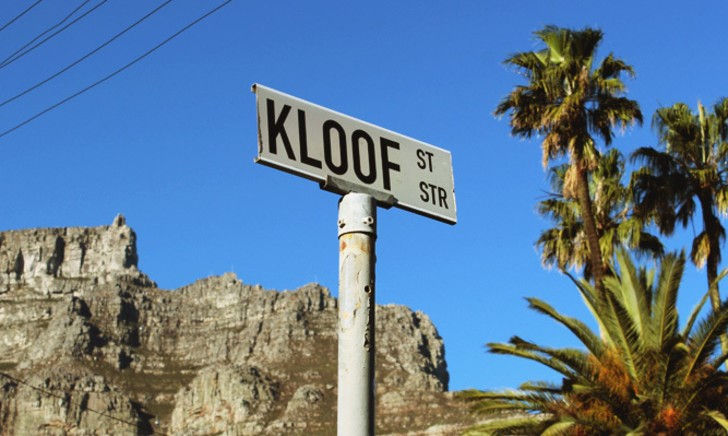
Villa Bianca's location is ideal for us to explore the best of Cape Town. Uphill it goes directly to Table Mountain, downhill to the center and from there directly to the V&A Waterfront. Kirstenbosch National Botanical Garden is also only a short drive away from us, highly recommended. Fifteen minutes walk on Kloofstreet there is also a selection of restaurants, cafes and shops to stroll around and explore.
The service is also first class. Chad is just great. We are really spoiled by him during our stays. His daily routine is kind of breathtaking too; as a marathon runner, he trains every morning at four o'clock, after which he prepares breakfast for all the guests and then it's on to the rest of the day's work.Always in a good mood and up for a joke. He tells us a lot about Cape Town and gives us tips on where we absolutely have to go and helps us to reserve the restaurants. It doesn't seem any better than at home, without a reservation it usually ends with take away, smile. Dear Chad, It was a great pleasure for us to meet you. We keep our promise to visit you when we are in the V&A with the Najuma.


Our evening departure area, Kloof Street
Out of the house, left, right again and down the street, across the dog park (always look at the ground), out the back through the gate, three streets further and we're on Kloof Street.
Kloof Street is a vibrant and popular street in Cape Town. Stretching from the city center to the foot of Table Mountain, it offers a diverse mix of restaurants, cafes, shops and entertainment venues.
It is known for its vibrant and cosmopolitan ambience. The street is buzzing with activity, attracting locals and tourists alike. Here you will find an abundance of restaurants and cafes offering a wide range of cuisines and tastes. Whether you're looking for local dishes, international cuisine, vegetarian options or gourmet experiences, you're sure to find something here.
In addition to the culinary diversity, Kloof Street also offers an interesting selection of shops. Here you will find boutiques, art galleries, bookstores, antique shops and much more. The street is a popular destination for shopping lovers looking for unique and trendy products that don't follow the mainstream.
Especially in the evenings there is a lively hustle and bustle here. The city awakens and begins to pulsate. Bars and pubs where you can enjoy a drink are lined up side by side. The scene is colorful and international. You can hardly get enough of it.
Another attraction along Kloof Street is its proximity to Table Mountain. The majestic mountain rises in the background providing a breathtaking backdrop.Seated and uncovered outside in both summer and winter. With Börek, pizza or lamb curry you can watch the street and enjoy the last rays of sunshine falling on Table Mountain.
We often spent our evenings in Cape Town on Kloof Street and got to know some great restaurants with beautiful gardens and terraces. The food was always very "lekker", as one is used to in SA. We've actually never had a bad meal down here. But once at the airport in Cape Town, that was horrible. We put it out of our minds and remembered all the beautiful food.
In the night there is always "that thing" with which to go home in the dark. A digestive walk, as we like to say (you know that in Germany too, it's your invention, hahaha). Basically we feel safe in Cape Town, i.e. there are simply places where we don't go or just drive through. To follow Chad's instructions: walk there, Uber back. During the load shedding it is really dark on the streets, no street lamps are lit, most of the houses are only dimly lit, sometimes a bit scary. Up and down Kloof Street is no problem, walking across the neighborhood is more of a challenge. The four of us walked twice, okay, but it really doesn't have to be, a taxi costs about CHF 2.50 for the route to the villa, so it's definitely doable. For this purpose we have to let the good Swiss and Germans take the tax and act sensibly. You never stop learning, that's how it is in life and when travelling. Chad was almost shocked when he found out we walked. It should be noted that Sandra scolded us all! Ashes on our heads, from now on we'll understand better, I promise.

The industrial port in Cape Town and a strike in the docks......... and thoughts on South Africa and our trip
Cape Town's port industrial area is a major economic hub and plays a central role in trade and industry in South Africa. It is strategically located on the south-west coast of the African continent, providing access to major shipping routes between Europe, the Middle East, Asia and the rest of Africa.
On our first road trip to Cape Town, we spent a week driving back and forth across the waterfront to visit the Knysna Yacht Company's subcontractor operations. It was about discussing the details for the mast, the sails and to see where we can buy which spare parts and accessories. A real rally, the area is huge!
The Port of Cape Town, also known as Victoria & Alfred Harbour, is South Africa's oldest port and one of the busiest ports in the country. It has several container terminals where goods from all over the world are handled. The port plays an important role in the export of South African products such as minerals, wine, fruit and agricultural produce, and facilitates the import of goods and raw materials for the domestic market.
The port industrial area includes not only the port itself, but also surrounding commercial areas and industrial plants (we were just circling around). Here you will find various sectors and companies that benefit from the maritime economy. These include logistic companies, warehouses, transport service providers, shipping companies, shipyards, oil refineries and many more. The area offers a wide range of jobs and contributes to economic development and employment in the region.The pandemic and partly also mismanagement have put a lot of things under pressure. The industrial peace in the docks does not always last either. Parts of the port were blocked off by pickets for days, and passage was no longer possible. The goods stayed where they were, our container with all our belongings traveled on to Durban and finally ended up back in the port of CP. Politics and economics are an endless topic here in South Africa. We have had many discussions with Mark and Liz to understand things and learn how things are connected. In the end, there is still hope for less corruption and a fairer distribution of wealth to everyone. South Africa is a fantastic country and we hope that it can create structures out of its turmoil that provide a basis and make it worth living for everyone. All aspects are part of our journey. We don't want to judge, just listen carefully and form our own opinion. It is a great privilege to be able to experience all this and maybe with our small contributions we can give insights into other worlds.
An important aspect of the port industrial area is also the infrastructure required for the efficient operation of the port and the surrounding industry. This includes port facilities such as quays, cranes and storage areas, as well as road and rail links to facilitate the movement of goods. The port is also equipped with a modern customs and clearance system to make the import and export process efficient. We can't complain, our container was declared quickly upon arrival and was driven to Knysna by truck.The port offers its own beauty with its loading cranes, the piled up meters high and colorful containers, ships, warehouses and shops, an unmissable tangle of streets and driveways. You can smell the sea, sometimes also the industry, a busy place. Not a nice port, although the yacht club is right in the middle, but definitely worth seeing. A place where visitors tend not to go, not a place for day tourists, maybe a short harbor tour, but that's about it. We have seen a lot and done a lot during this time and looked into all corners, even where the misery is and we are confronted with a lot. A lot is diametrically opposed here in the south of the continent, but because of the many shades seen as a whole, it is very livable and free for many, lots of space and width, maybe in our hearts it is still a country of longing for us.

Northsails South Africa
During our stays in Cape Town we also visited Northsails. David Rae, himself a gifted regatta sailor, runs the sailloft and Steve Meek is responsible for the entire tarpaulin production.
The hall where the sails are made is really impressive. Northsail supplies a large part of the sails for the surrounding shipyards. Many sails for the European market are also manufactured here. The advice is excellent and straight to the point.
The same applies to the manufacture of tarpaulins, window coverings, etc. Steve Meek is an old hand in his field and knows exactly what is important. We are grateful that he agreed to take over the production of our cat. It is the first time that Northsails fully equips a Knysna 500SE. We also had the chance to view some other boats with Steve's work; top work, top quality.


There is still a lot of manual work in the manufacture of sails.
Sparcraft Masts South Africa
Another major component of our catamaran is the rig, i.e. the mast, the standing rigging such as shrouds and stays, as well as the running rigging, sheets, halyards and other accessories. The Sparcraft production facility is almost around the corner at Northsails. The company should not be confused with the French company of the same name. Although they source some components from France, the manufacture of the masts is on a different level. The components on our mast are massive and usually one or two sizes oversized, which is responsible for the weight, but brings with it a great deal of safety for blue water travel. Experiencing the anodizing (refining of the aluminium) of your own crossbeam (this connects both fuselage parts at the bow) in the factory is something special. It is probably only possible to follow the construction of the ship so closely in these so-called "boutique builder shipyards". For us an experience of a lifetime.


The crossbeam is welded together and the boom in an anodizer for finishing.

The finished mast ready for delivery on the trolley.
Townships
On our road trips to Cape Town we also come into contact with the townships.
A lot has changed since our last trip to South Africa in 2015. In addition to the very poor areas in the north and east of the city, built over with tin and wooden shacks, newer developments with solid stone houses and the associated infrastructure have also emerged. The formation and history of the townships is closely linked to the apartheid era. Our peers can certainly remember, if only remotely, how South Africa was put under economic sanctions by the US and Europe. The embargo lasted until the 1990s. For some of us, a boycott of foods like "Granny Smith" apples was a clear statement.Something about the history of the townships. During apartheid, laws were enacted to promote racial segregation and social inequality. The townships arose as a result of this policy and were established as residential areas for the non-white population. In the 1950s, the South African government began to settle people in certain areas based on their race. In the process, many non-white residents were expelled from the central parts of Cape Town and resettled in remote areas. These areas were called townships and were often characterized by poor infrastructure, poverty and social problems. A well-known example of a township in Cape Town is Khayelitsha, which emerged in the 1980s. Khayelitsha quickly grew into one of the largest townships in South Africa and is still home to a large number of people today. In the townships, residents often lacked access to adequate health care, education and other basic services. After the end of apartheid in 1994, measures were taken to promote the social and economic development of the townships. Programs have been introduced to improve infrastructure, education and economic opportunities. However, many challenges remain and the townships continue to be affected by poverty, crime and social inequalities. In recent years there have also been initiatives to promote tourism in some townships to give visitors an insight into the life and culture of the residents. This has led to some economic development in some parts of the townships, but the fundamental problems of poverty and inequality have not yet been fully resolved.





Khayelitsha near Cape Town, built in 1980, one of the largest townships in South Africa
V&A Waterfront
The Victoria & Alfred (V&A) Waterfront is an absolute highlight of Cape Town and a place not to be missed when visiting the city. Named after Britain's Queen Victoria and her son Prince Alfred, the V&A Waterfront is a vibrant neighborhood known for its mix of history, culture, shopping, entertainment and dining.
Located on the Port of Cape Town, the V&A Waterfront is a historic site that once served as a landing stage for ships en route to India and other commercial destinations. Today the area has become a lively center for tourism, leisure and entertainment.
One of the most distinctive features of the V&A is its architecture. Here you will find historic buildings from the 19th century that have been lovingly restored and form a charming contrast to modern buildings. The Waterfront is also a popular port of call for luxury yachts and offers magnificent views of the harbor and the majestic Table Mountain in the background.
From the Villa Bianca it is only a stone's throw into the middle of the hustle and bustle. On sunny days, half the world meets here for a walk, a shopping tour, a harbor tour, or simply to see and be amazed. At the end of a long day in the industrial area, we are always drawn to the waterfront for an aperitif. See and be seen, wink.
The Waterfront also offers a wide range of restaurants, cafes and bars where one can enjoy a wide range of international and local cuisine. Whether you want to taste fresh fish and seafood, relax with a glass of South African wine or take a culinary journey around the world - you will certainly find it here. Despite the great variety, we are always drawn to the same restaurants; our absolute favourite, who would have thought it, is the Willoughby, a Japanese restaurant. The view is a bit limited, it's in the middle of the mall, but the selection is phenomenal. As always with us; Sushi and a nice bottle of wine. The prices are steep, but the culinary delights make you look the other way.
Entertainment is also provided. The Waterfront Amphitheater regularly features live music, dance and theatrical performances. In addition, there are also countless street artists and music groups on the waterfront and underline the scenery in a very pleasant and entertaining way.





The Cape of Good Hope
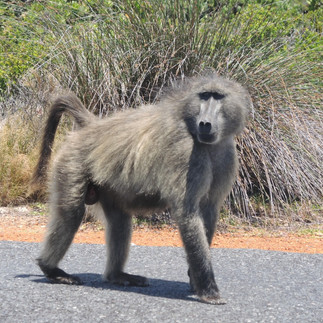
Just driving along Arthur's Peak Drive along the coast is an experience in itself. The rough landscape with cliffs, wonderful beaches and small villages in between make the journey to the end of the continent an experience. The entrance to the national park is a few kilometers from the cape. There is first cashed in strongly before it goes on. Behind the first hill on the driveway, the first baboons are already waiting in the middle of the street.The Cape of Good Hope, also known as the Cape, is a prominent promontory on the southwestern tip of the African continent. It is about 60 kilometers south-west of Cape Town and is part of Table Mountain National Park. The Cape is known for its spectacular coastline, impressive cliffs and diverse wildlife. The dramatic rock formations and crashing waves of the Atlantic Ocean provide a breathtaking backdrop. It is a popular destination for those who want to experience the beauty of nature and explore the beautiful countryside. One of the most famous sights at the Cape of Good Hope is the lighthouse. The historic lighthouse that stands on the premises is a landmark and offers impressive views of the surrounding countryside and ocean. We then hiked on the hiking trails along the cliffs from the lighthouse to Cape Point. A short hike with fascinating views of the vast Atlantic. Only 600 nautical miles south the "roaring fortys" begin and soon the polar sea. When we hear Africa we always think of warmth, palm trees and lions. Well, there is that too, but this year winter has the scepter firmly in hand down here at the end of Africa. As everywhere, there is an unusual weather situation here, it seems that climate change has us firmly in its grip.
The history of the Cape of Good Hope is also fascinating. It was an important site for seafarers on their voyages along the trade routes and was often used as a landmark. The waters around the cape are also known for their dangerous conditions, with strong currents and rough waves that have killed many vessels. The name "Cape of Good Hope" was chosen as it was often the first sign of land sighted by seafarers after a long and perilous voyage. Our first cruise on the Najuma will take us from Knysna to Cape Town. Along the coast and around the Cape, the journey will take around 40 hours. We are really looking forward to it and also to circumnavigating the cape, one of the great capes on earth. After that, arriving in Cape Town from the sea will certainly be a special experience.
The Cape is a symbol of the beauty and wildness of nature, a truly fascinating place of great historical, cultural and geographical importance and a must-see when visiting Cape Town.
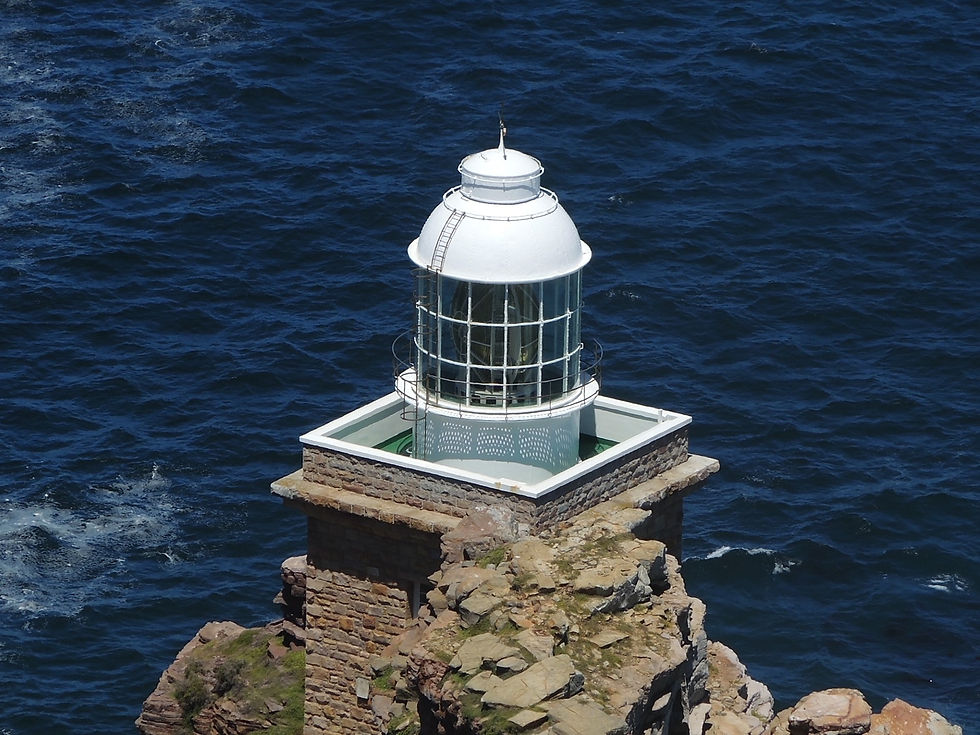


The Cape of Good Hope invites you to linger. We stay all day and hike from the lighthouse to the cape and back.





Boulder Beach
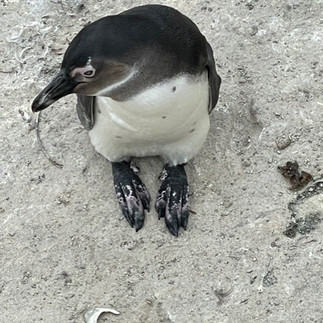
Boulders Beach outside of Cape Town is a stretch of coast known for its colony of African penguins. The beach is located near Simon's Town, about 40 kilometers south of town, and is part of Table Mountain National Park. On the way back from the Cape, a visit to the penguins is a must. We went twice and could hardly tear ourselves away from the penguins.
The name "Boulders Beach" derives from the large granite boulders that characterize the stretch of beach and give it a unique appearance. The rocks create sheltered coves and rocky pool areas that are ideal for nesting and living of African penguins.
These charming birds are known for their striking black and white coloration and their distinctive yellow under-eye circles, which have given them their name. Boulders Beach is home to a large colony of African penguins, and visitors have the opportunity to see the penguins up close and meet them in their natural habitat. The colony is sheltered, fenced and located right between the houses built on the beach. The penguins seem to feel at home here and keep coming back to their place of birth. You can explore the colony on your own on boardwalks specially designed for this purpose. They can't be disturbed by anything and you can almost ask yourself who is watching whom.In addition to the penguins, the path from the entrance to the parking lot is "very Africa" with street vendors tirelessly offering their wares, including some really nice handicrafts. All kinds of small animals made of wire and glass beads are popular, a nice reminder of South Africa.


Camps Bay, where the rich and famous live
A short drive from Oranjezicht over the Kloofsneck, between Table Mountain and Lions Head takes us straight down to the sea and Camps Bay, a picturesque seaside town
and one of the city's most popular and exclusive beach spots. It lies at the foot of the Twelve Apostle Mountains and offers a breathtaking view of the Atlantic Ocean.
Camps Bay Beach is famous for its fine white sand and clear turquoise water. The beach stretches over a large area and offers enough space for sunbathers, beach walkers and water sports enthusiasts. The waves at Camps Bay are generally gentle, making the beach a popular spot for swimming and sunbathing. Despite all this, we are waiting and will plunge further north and closer to the equator.
Camps Bay is not only known for its beach, but also for its luxurious villas. The surrounding area is characterized by elegant houses and exclusive hotels, which make the place a sought-after destination for discerning travelers. Victoria Road, which runs along the seafront, is known for its upscale shops, trendy cafes and top-notch restaurants. Here you can take a walk, buy souvenirs or dine in one of the gourmet restaurants and enjoy the view of the sea.Different worlds meet again here in the posh suburb; Figuratively speaking, rich and poor are sometimes literally across the street. We can't question everything every day and enjoy a few nice hours on the beach and over coffee, knowing that not everything can be taken for granted.
Don't get too attached to good luck and don't lament too much bad luck.
Peter Sloterdijk


A reunion and a meeting
After our last adventure together on Porto Santo, Madeira and the Canary Islands, we meet Herwig again after more than a year in Cape Town in our "Villa". Finally we get to know his partner Irmi. A piece of home travels with you and the joy of seeing you again is great. While the two of them explore all corners of Cape Town and have some adventures, we go shopping for accessories and spare parts in the industrial area. In the evening we usually go to Kloof Street to have dinner together. Herwig and Irmi's adventures are varied and even extend to a safe ride in the police car to the church in the Long Street area. Security guards spotted her on a lonely road and were concerned for her safety. The police were informed immediately and from then on the car was transported to the next safe place; this is South Africa too. You can't think about it all day long, but there are definitely places to avoid. Basically, we feel safe in South Africa. As with anything, common sense helps.
Another Friday night is the Oranjezicht Market, right next to the waterfront and the football stadium. Numerous tables are set up under a huge tent with a view of the sea and many small market stalls and bars invite you to eat and drink. Cape Town is a city with a lot of young people and that really becomes apparent here at the market. We enjoy the multicultural atmosphere, the fine food and also some beers and wines.Another evening we celebrate Herwig's birthday at the Codfather in Camps Bay, it almost sounds like mafia. The restaurant is an institution and is always fully booked. We were lucky and were able to get a table in advance. As the name suggests, fish is the order of the day. The special thing is that you go to the counter and point to the fish you would like to eat, pay by weight and then get it served on a large platter.
It was a great experience, thank you Herwig for the invitation and the nice memory of your birthday.
After Cape Town, Irmi and Herwig traveled along the coast to Knysna and stayed with Liz and Mark on Loerie Street for a further two weeks. Joint excursions, delicious dinners, a bit of golf for Herwig and long evenings with a glass of wine will remain in our memories.


Herwig celebrates his birthday with us. Champagne breakfast at Villa Bianca and a wonderful dinner at The Codfather in Camps Bay; what a day!





Oranjezicht Market
Our little expedition up Table Mountain
Table Mountain is undoubtedly one of Cape Town's most recognizable landmarks and a natural wonder that draws visitors from around the world. With its distinctive flat top resembling a table, it rises majestically over the city and provides an awe-inspiring backdrop.
Table Mountain is part of Table Mountain National Park, which is home to diverse flora and fauna and is considered one of the seven natural wonders of the world. The natural beauty of the mountain is awe-inspiring, with sheer cliffs, rocky peaks and lush valleys. The summit reaches an altitude of approximately 1,085 meters and offers spectacular views of the city, the Atlantic Ocean and the surrounding coastal area.
There are several ways to explore Table Mountain. The most popular is the Table Mountain Cable Car ride, which takes visitors comfortably and quickly to the top. Sandra and Herwig chose this option to get to the summit. With a reserved ticket, you shouldn't have to wait in line, but you should. Then there is the VIP ticket with its own access to the gondola, which is excessively expensive. They then chose this path, past the column to the two nice young guys who then led them to the VIP entrance for a small tip (no idea how small it was), wink. The cable car offers stunning panoramic views during the ride and allows visitors to explore the viewing platforms at the summit. From there you can enjoy the view over Cape Town, the beaches, the sea and the surrounding mountains.
For those who like hiking, that would be Irmi and Gottfried, there are also various hiking trails that lead up Table Mountain. The most popular is the Platteklip Gorge Trail, which starts off Tafelberg Road and runs along a steep gorge. The trek requires a certain level of fitness and takes around two to three hours, but rewards hikers with spectacular views and a sense of accomplishment when you reach the summit. The feeling has to wait a while, first the altitude has to be overcome. it is really very, very steep and on a sunny day like ours it was also very hot. Some take the steep path under their feet to get to the top, with more or less joy. A rescue helicopter monitors the ascent on special days. There was also a trail run up and down. There are a few places with shady bushes on the climb. So we rest there and enjoy the beautiful view. After about 1.5 hours you come out of the gorge onto an intermediate plateau with a first view of the back of the mountain. From there it goes over a steep cliff secured with chains to the actual summit plateau, then it's not far to the cable car station. We all meet up again at the top and toast to the successful ascent. Together we do another summit - circular hike and then we start the descent. Gottfried on foot to the Villa Bianca, the others with the cable car and the taxi. An exciting and eventful day, which, as always, we end with a good dinner and a little sore muscles in our legs.


Ascent to the summit. It was hot and steep, but the summit beer in front of our eyes gave us wings.


Stellenbosch and Jordan Wine Estate
On the return journey from Cape Town, it's almost logical to make a detour to Stellenbosch, a town in South Africa's Western Cape province. It is the second oldest European settlement in the region after Cape Town and has a rich history dating back to the 17th century. The city is known for its scenic surroundings, cultural attractions and role as the center of South African wine production.
Stellenbosch is surrounded by a stunning landscape of rolling hills, vineyards and majestic mountains such as the Stellenboschberg. The town itself has charming and historic architecture with Cape Dutch buildings, cobblestone streets and tree-lined avenues. It is a popular travel destination for those looking to experience the region's natural beauty, rich culture and excellent wines. We also took this trip under our wheels and after a week in the big city we really enjoyed the provincial touch.
The University of Stellenbosch, founded in 1918, is one of the most prestigious universities in South Africa and gives the city a lively and intellectual atmosphere. The university has a strong focus on the viticulture industry and many students study viticulture and oenology here.
Wine production is one of Stellenbosch's main attractions. The region is internationally known for its excellent wines and attracts lovers from all over the world. There are numerous wineries and routes where visitors can sample wine, enjoy the scenic countryside, and learn about wine growing and production. Some of the most famous wineries in the area are Simonsig, Spier, Kanonkop, one of our favorites (there's still some wine in the cellar in Ottenbach, smile) and Delaire Graff Estate.
This time we have chosen a younger winery with less history but an excellent restaurant and exquisite wines. The recommendation came from Stephen and if not him, who could know better. We already had the first drink at his Knysna - Cat in Grenada.

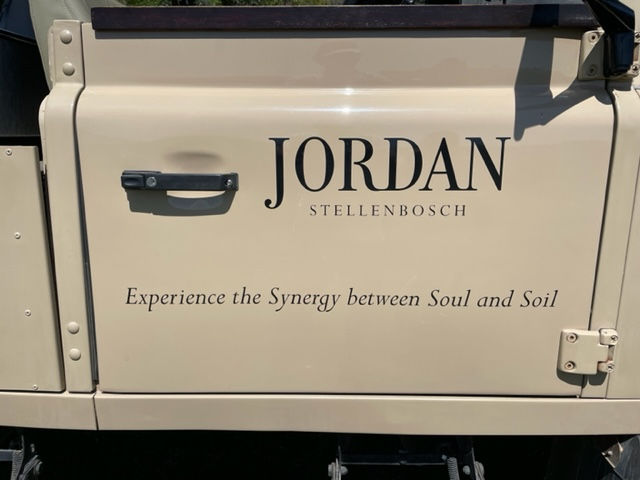
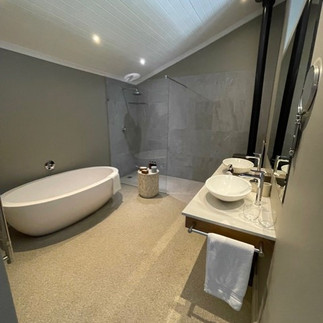
The Jordan Wine Estate is a renowned wine estate in Stellenbosch. It is located in the heart of the wine-growing region, about ten minutes by car from the town, surrounded by rolling hills surrounded by vineyards. Jordan Winery was founded by Gary and Kathy Jordan in 1982 and has since built an excellent reputation in the industry. It covers an area of around 164 hectares planted with vineyards, olive groves and fields of lavender. Production at Jordan Wine Estate includes a wide variety of varietals including Sauvignon Blanc, Chardonnay, Merlot, Shiraz, Cabernet Sauvignon and many more. Jordan's wines are known for their high quality and individual character and have already received numerous international awards. In addition to hikes through the vineyards, we also tasted most of the wines and were given a tour of the winery.On the winery you are well accommodated in small houses with very luxurious finishes. A fireplace in the bathroom rounds things off and warms up the whole room. Despite the sunny weather, the cozy warmth of the stove was a great thing, after all we had just come from the Caribbean to winter in Africa.


Wine tour and vineyard walk at Jordan Wine Estate.


A visit to the wine cellar is of course also part of it.


This is a very good life!
A special feature of the Jordan Wine Estate is the Jordan Restaurant, which is located on the estate. It has been awarded several times as one of the best restaurants in South Africa and offers exquisite cuisine that harmonises perfectly with the winery's wines. The restaurant offers beautiful views of the surrounding vineyards and mountains, both indoors and outdoors. We were just there for the reopening under a new boss. Marthinus Ferreira is now responsible for the operation and the excellent cuisine. It was not only a delicious menu but also a feast for the eyes (https://www.jordanwines.com/dine-with-us/jordan-restaurant).





We spent the second evening at Fat Butcher (https://www.fatbutcher.co.za) in Stellenbosch. The name is program. The different types of meat, cuts and preparation options were presented to us in detail at the table. The weather god was kind to us and we were able to dine under a canopy of flowers. The food was excellent and so were the wines. Unfortunately, our trousers also got some of the flowers, but what you can't see doesn't bother you, hahaha.
Noordhoek
Since the US Embassy is over the mountain not far from Noordhoek, we stayed at the Wilde Rose Country Lodge. A real adventure. You all surely remember the movie "Jumanji". We haven't moved any stones on the game board, but the entrance to the lodge is already auspicious. Everything is a bit old, including the house dog named Tequila, deaf, almost blind and he stumbles over every threshold. Thatched roof, old English leather sofas, trophies on the walls, we were transported straight into another world. The bed like a hammock rounded off the safari feeling.
One more thing about Noordhoek. The history of Noordhoek, a suburb of Cape Town, dates back to the 18th century. The name "Noordhoek" comes from Dutch and means "north corner". Located in the southern part of the Cape Peninsula, the suburb is known for its natural beauty, beaches and rural atmosphere. The area around Noordhoek was originally inhabited by the Khoi-San, the region's indigenous people. The first European settlers arrived in the area in the 17th century when the Dutch East India Company established a supply station in the Cape. The area was used for agricultural purposes, particularly for growing wheat and raising livestock. In the 19th century the village developed into a small rural community with a growing population. Residents were mainly farmers and fishermen who made their living from the region's natural resources. The scenic beauty of the area also attracted some wealthy Capetonians who established holiday homes and country estates here. The beaches of Noordhoek are popular with surfers and beach lovers and the region offers plenty of outdoor activities such as hiking, horse riding and bird watching.A small brewery with various restaurants has established itself near our lodge.We end the two evenings in Noordhoek with a wonderful view over the beach and the grove in front of it with a glass of beer and cider. The atmosphere is informal, the food amazing, simply easy South Africa!


Wild Rose Country Lodge; morning yoga with Bella, breakfast with Tequila


It worked, we got our US visa
The days in Cape Town and the surrounding area passed far too quickly and we were already on our way to Knysna. After almost a year in South Africa it feels like going home after the holidays.
Our trips to Cape Town and the surrounding area are characterized by many experiences and impressions. All we can say is: Cape Town you beautiful, we'd love to come back!
Comments